Company Culture
Understanding Company Culture in Knowledge-Based Organisations
Company culture plays a central role in how organisations function, make decisions, and sustain long-term performance. Academic research consistently defines organisational culture as the shared values, norms, beliefs, and behaviours that shape how people work together and respond to challenges (Schein, 2010). In knowledge-based and technology-driven organisations, culture becomes especially critical, as work depends not only on technical skill but also on trust, responsibility, and collaboration.
Rather than being defined by formal policies alone, culture is expressed through everyday practices: how teams communicate, how responsibility is shared, how flexible arrangements are handled, and how individuals are trusted to manage their work. A strong culture provides structure without rigidity, enabling organisations to remain effective while adapting to changing contexts.
Trust as the Foundation of Organisational Culture
Trust is widely recognised in organisational studies as a foundational element of effective workplaces. According to Mayer, Davis, and Schoorman (1995), trust enables cooperation, reduces the need for excessive control, and supports autonomous decision-making. In environments where trust is present, employees feel confident that their contributions are valued and that expectations are clear.
In this organisation, trust is built through transparency, consistency, and open communication. Employees are trusted to manage their time responsibly, meet their commitments, and communicate proactively when challenges arise. This trust is not unconditional; it is reinforced through accountability and mutual respect. The result is a working environment where individuals are empowered rather than micromanaged.
Trust also supports psychological safety, a concept extensively studied by Edmondson (1999), which refers to the shared belief that individuals can speak openly without fear of negative consequences. This allows teams to raise concerns, ask questions, and learn from mistakes, contributing to continuous improvement.
Competency and Continuous Learning
Competency is not treated as a static attribute but as an evolving capability. Academic literature on professional competence emphasises the importance of continuous learning, especially in fields related to technology and systems thinking (Eraut, 2004). Rapid technological change requires organisations to foster learning cultures where knowledge is regularly updated and shared.
Within this company, competency is demonstrated through a strong commitment to technical quality, structured thinking, and clear communication. Complex tasks are approached methodically, ensuring that outcomes are reliable and understandable. Importantly, competency is not limited to technical expertise; it also includes the ability to explain complex concepts clearly and responsibly.
Learning is embedded into daily work rather than treated as a separate activity. Employees are encouraged to deepen their understanding, refine their skills, and adapt to new tools and methodologies. This aligns with research showing that learning-oriented cultures are more resilient and better equipped to handle uncertainty (Garvin, Edmondson, & Gino, 2008).
Customer-Centred Thinking Beyond Service Delivery
Customer orientation is often discussed in relation to service quality, but academic perspectives extend this concept to include empathy, usability, and relevance (Narver & Slater, 1990). A customer-centred culture focuses on understanding real needs rather than delivering solutions in isolation.
In this organisation, customer focus is reflected in how information is structured, communicated, and presented. Work is designed to be accessible to different levels of technical understanding, recognising that clarity is essential for meaningful use. This approach aligns with human-centred design principles, which emphasise usability and comprehension as key drivers of effectiveness.
Rather than prioritising speed or volume, the organisation prioritises relevance and usefulness. This ensures that outputs support informed decision-making and long-term value creation.
Flexibility as a Cultural Enabler
Flexibility is a defining characteristic of modern organisational culture, particularly in knowledge-intensive work. Research on flexible work arrangements highlights their positive impact on job satisfaction, motivation, and performance when paired with clear expectations (Kossek et al., 2015).
In practice, flexibility within this company is expressed through adaptable working hours and a results-oriented approach. Employees are not constrained by rigid schedules; instead, they are trusted to manage their time in a way that supports both personal needs and organisational goals. Staying late when necessary is understood as part of professional responsibility rather than an imposed obligation.
This balance reflects what scholars describe as “responsible autonomy,” where individuals have freedom but remain accountable for outcomes. Flexibility here does not reduce standards; it reinforces them by placing responsibility directly with the individual.
Flexibility as a Cultural Enabler
Flexibility is a defining characteristic of modern organisational culture, particularly in knowledge-intensive work. Research on flexible work arrangements highlights their positive impact on job satisfaction, motivation, and performance when paired with clear expectations (Kossek et al., 2015).
In practice, flexibility within this company is expressed through adaptable working hours and a results-oriented approach. Employees are not constrained by rigid schedules; instead, they are trusted to manage their time in a way that supports both personal needs and organisational goals. Staying late when necessary is understood as part of professional responsibility rather than an imposed obligation.
This balance reflects what scholars describe as “responsible autonomy,” where individuals have freedom but remain accountable for outcomes. Flexibility here does not reduce standards; it reinforces them by placing responsibility directly with the individual.
Responsibility and Accountability
Responsibility is a core value that connects trust, flexibility, and competency. Academic studies on organisational responsibility emphasise that autonomy must be accompanied by accountability to be effective (Hackman & Oldham, 1980).
While the workload in this organisation is described as manageable rather than excessive, expectations around responsibility remain clear. Tasks must be completed with care, deadlines respected, and quality maintained. Responsibility is not enforced through pressure but through shared understanding of professional standards.
This creates a sustainable work environment where employees can perform consistently without burnout, while still maintaining high levels of reliability and commitment.
Work Environment and Social Climate
A positive work environment is not defined by intensity or constant urgency but by balance, respect, and mutual support. Research consistently shows that healthy organisational climates contribute to long-term performance and employee well-being (Denison, 1996).
The company culture supports a calm, focused atmosphere where collaboration is encouraged and stress is managed responsibly. Work is taken seriously, but it is not overwhelming. This balance allows individuals to remain engaged without compromising their well-being.
Culture as a Strategic Asset
From an academic perspective, culture is not a secondary or “soft” aspect of organisations; it is a strategic asset. Strong cultures align behaviour with values, reduce friction, and support consistent decision-making (Barney, 1986).
In this organisation, culture aligns clearly with its core values: trust, competency, customer focus, flexibility, and responsibility. These values are not abstract statements but are reflected in daily practices, expectations, and interactions.








Personal statement
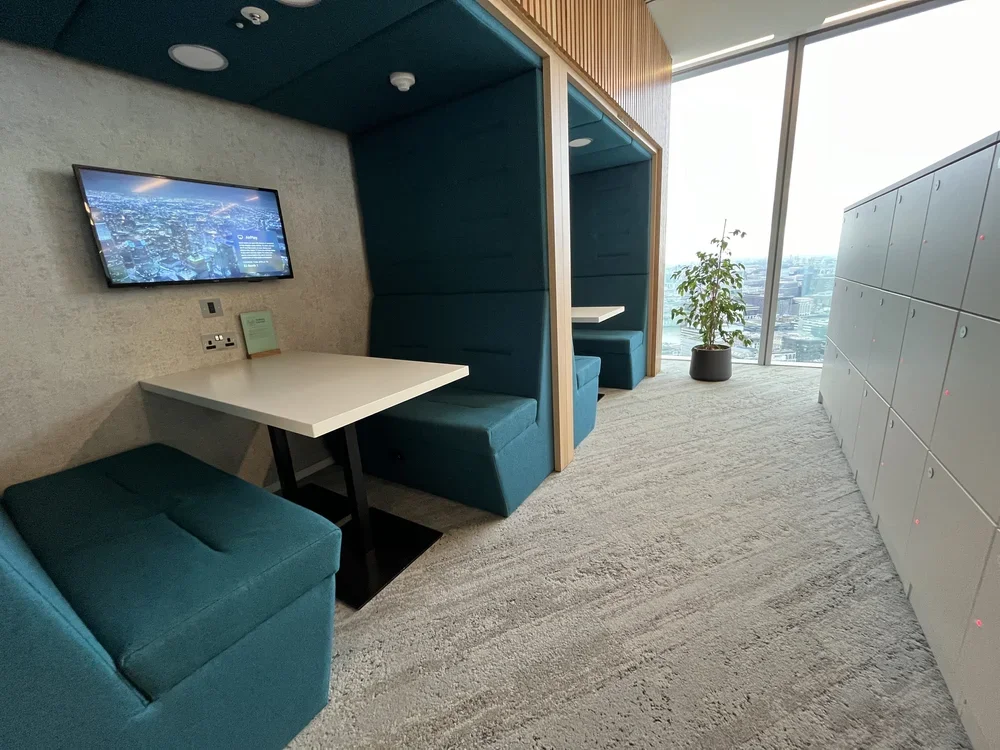
From my experience working at the company, the work environment is consistently positive and respectful. There is a strong sense of trust and flexibility, particularly around working hours, which allows people to organise their time responsibly without unnecessary pressure. Deadlines and commitments are handled with care, and there is a clear balance between expectations and support.
This way of working creates an atmosphere where people feel valued and respected. Not being rushed or micromanaged, while knowing that responsibilities are taken seriously, naturally encourages a deeper level of commitment. It motivates individuals to put in the effort not because they are forced to, but because they genuinely want to contribute to the company’s growth and success.
This culture makes me want to be part of the company’s expansion, so that more people can get to know it, join the team, and experience the same environment of trust, responsibility, and collaboration.
Johanna Viana
Analyst
Our Vision

Our vision is to support organisations operating in complex, high-responsibility environments by strengthening how information is understood, trusted and used. We believe that clear, well-structured data is not simply a technical asset, but a foundation for sound decision-making, long-term planning and public accountability.
We envision a future in which leaders, teams and institutions can navigate complexity with confidence, supported by information that is transparent, reliable and accessible. In contexts where decisions have lasting social, economic and public impact, we aim to contribute clarity, structure and insight that enable better outcomes over time.
As an organisation, we seek to grow as a trusted reference in transforming complex information into meaningful understanding. Our vision is not limited to delivering outputs, but to shaping how organisations think, plan and act when faced with uncertainty, competing priorities and long-term responsibility. We want our work to support decisions that are informed, balanced and grounded in evidence.
We also envision a company culture that reflects these same principles internally. A workplace built on trust, competence and responsibility, where flexibility is respected and people are encouraged to take ownership of their work. We believe that when individuals are trusted and supported, they are more committed, engaged and motivated to deliver high-quality results.
Our long-term vision includes sustainable growth, strong professional relationships and a reputation for reliability and integrity. As we expand, we aim to remain consistent in our values, maintaining high standards while adapting to the evolving needs of the organisations we support.
Ultimately, our vision is to contribute to a professional environment where information serves people, supports public value and enables organisations to act with clarity, confidence and responsibility.
